
The Gambia Cotton Trail is an initiative created to revive cotton production in The Gambia and, at the same time, create opportunities and employment for people in different parts of the country.
Cotton was once an important part of The Gambia’s economy. It provided work not only for farmers, but also for spinners, weavers, tailors and other people involved in turning cotton into finished products. Over time, however, cotton production declined, and much of the knowledge and infrastructure surrounding the industry disappeared.
The Cotton Trail began with a simple question: could some of this local cotton industry be brought back?
The answer was to reconnect the different skills and people involved in the process – from the farmer who plants the cotton seed to the person who eventually buys the finished product. Discover more about our latest community projects and updates right on our Home Page.
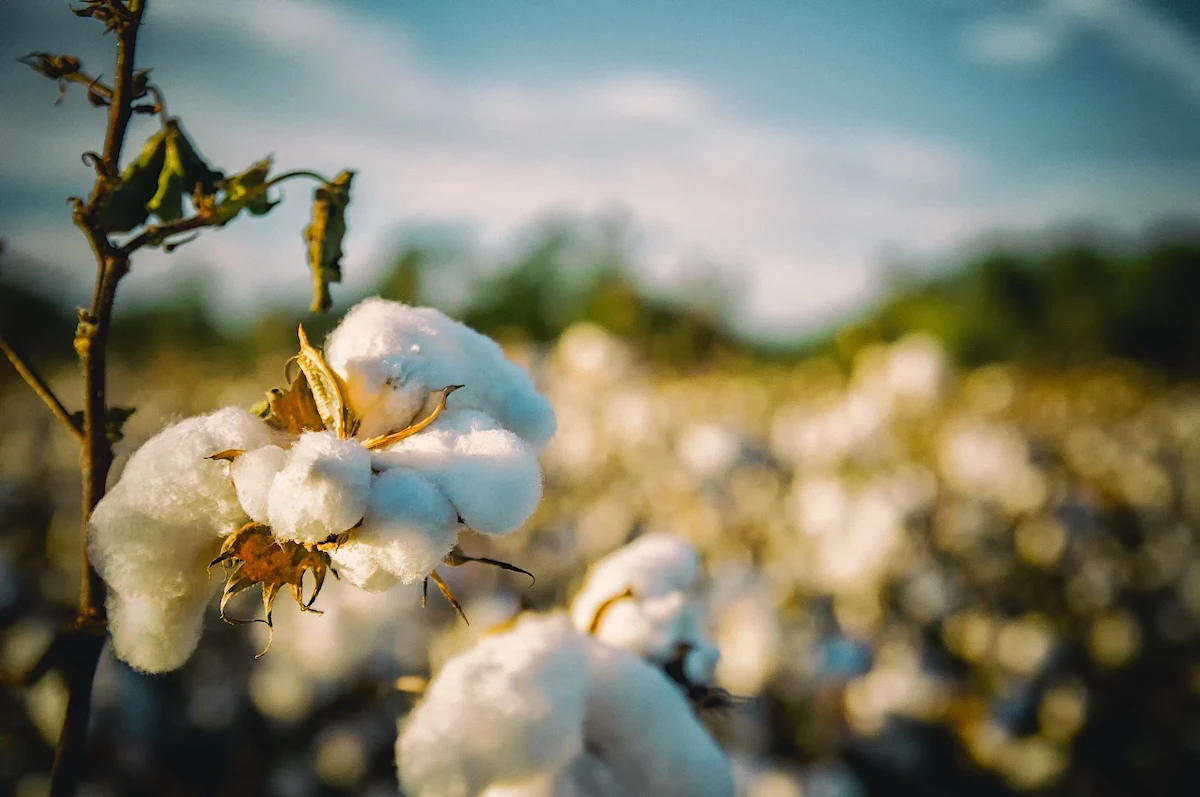 The foundation of the trail begins in the soil.
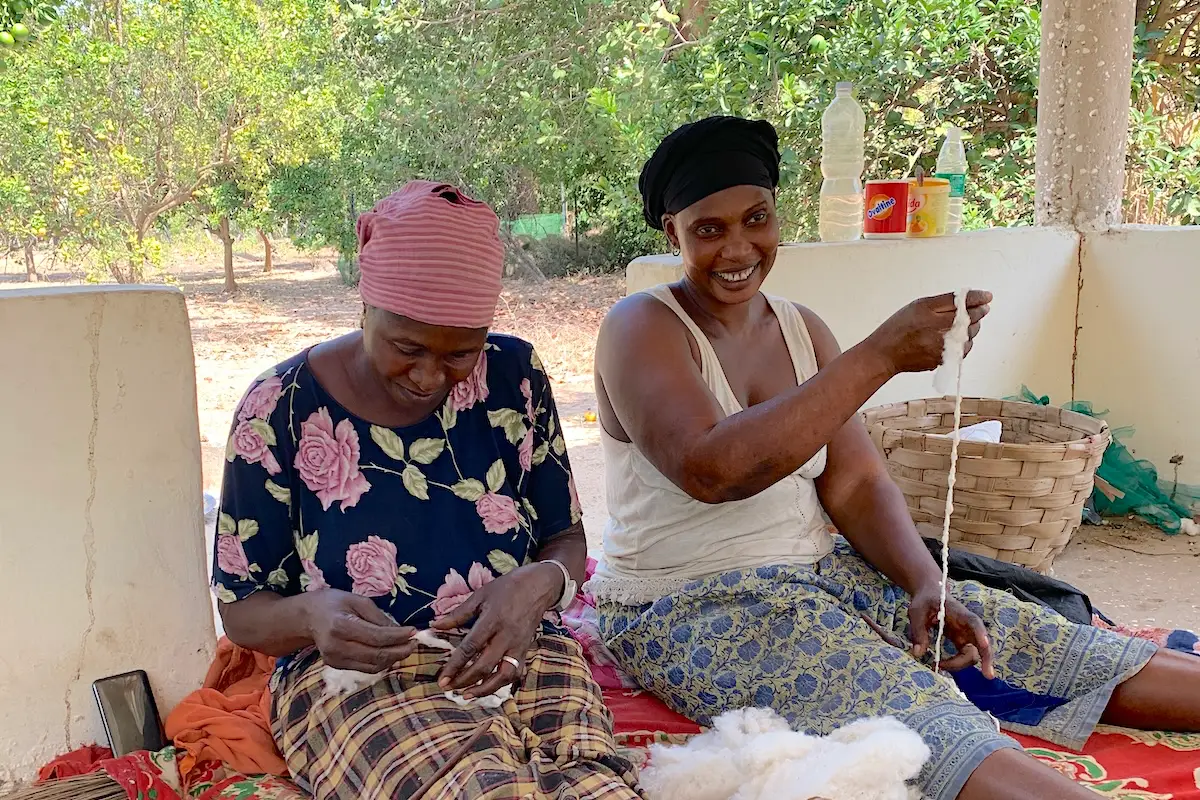 Hand-spinning yarn in the village of Njau.
From East to West
The Cotton Trail follows the cotton through The Gambia.
It begins with farmers in a small village in the Wuli district in the eastern part of the country. Cotton is planted at the beginning of the rainy season, making use of the natural rainfall. The farmers have generations of experience in growing cotton, but having a buyer is essential. Without a market for the harvest, there is little incentive to grow a crop that cannot simply be eaten or stored like food crops.
Once harvested, the cotton travels to Njau, where a local women’s group spins it by hand. The spinning brings together traditional knowledge and an opportunity for women to earn an income locally. From Njau, the cotton continues towards the coast, where local weavers turn the yarn into fabric. Weaving takes place in different locations, including Brikama and Gunjur, using both traditional narrow looms and wider European-style looms.
The fabric can then be used by local tailors, tie-dyers, artists and designers to create finished products.
This means that one piece of fabric can involve many different people and skills across the country.
More Than Cotton
The Cotton Trail is not simply about bringing back a crop. It is about rebuilding connections between communities and creating a chain of local production.
Farmers, spinners, weavers, dyers, tailors, artists and designers all become part of the same story.
The initiative aims to keep more of the value of the product within The Gambia. Creating work in rural areas is particularly important, as limited opportunities can be one of the reasons people leave their villages in search of work elsewhere.
The Cotton Trail also places importance on knowing where the fabric comes from and who has been involved in making it. Fair payment, transparency and local production are central to the way the initiative works. You can learn more about our mission, core ethics, and the team driving this change on our About Us page.
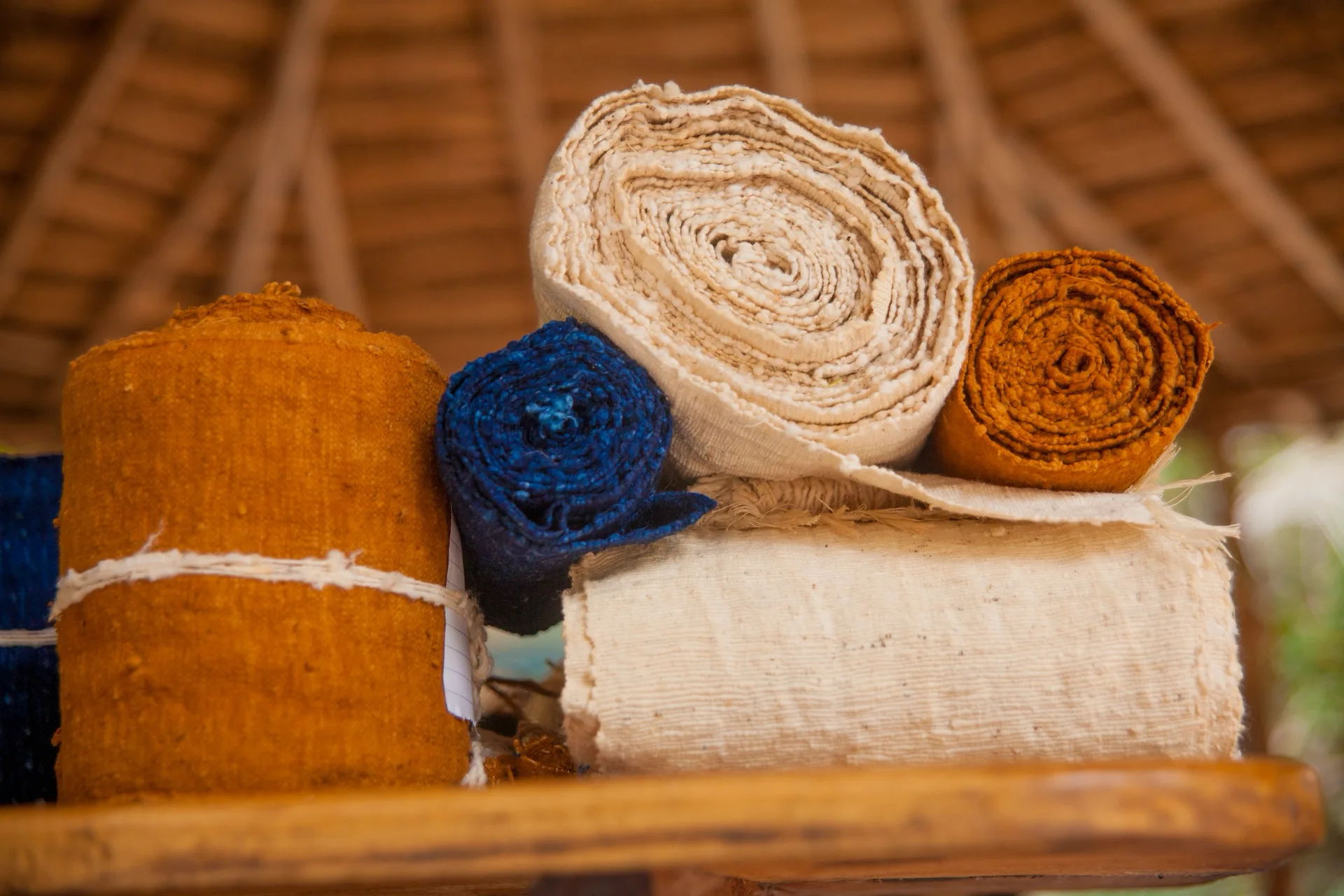
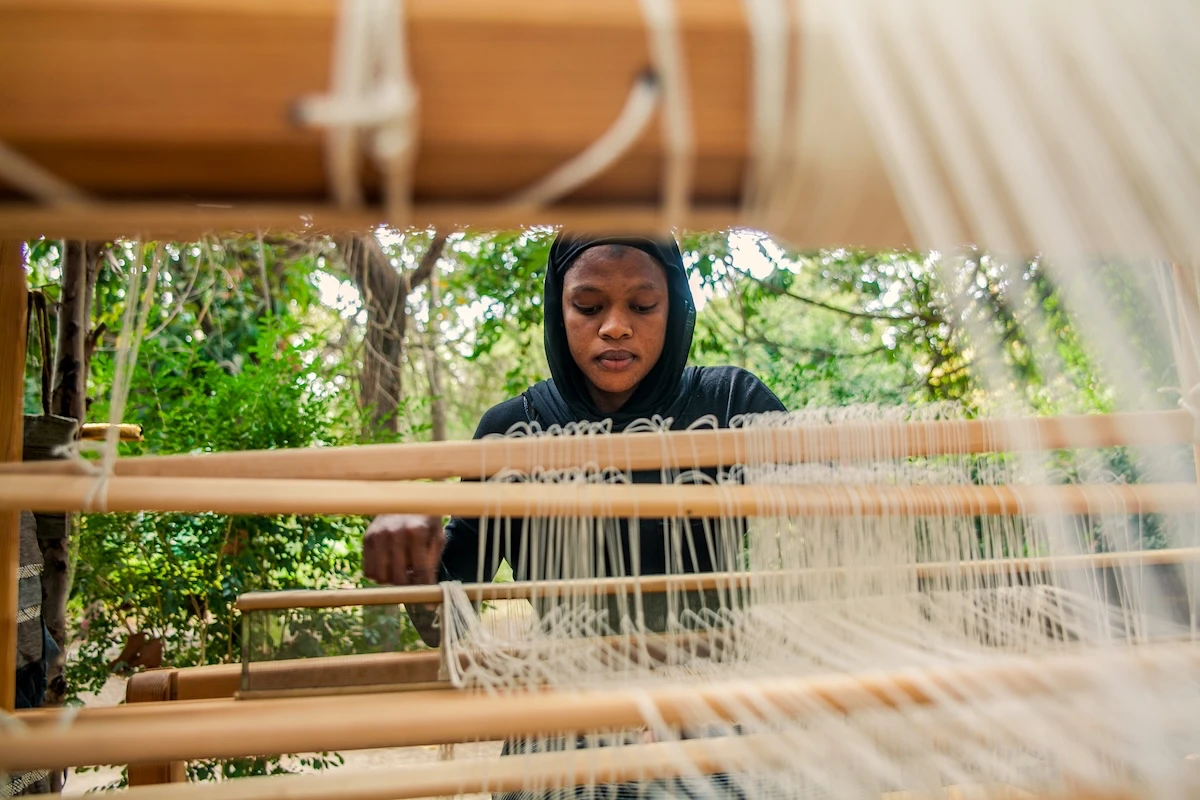 Weaving local yarns into high-quality textile fabrics.
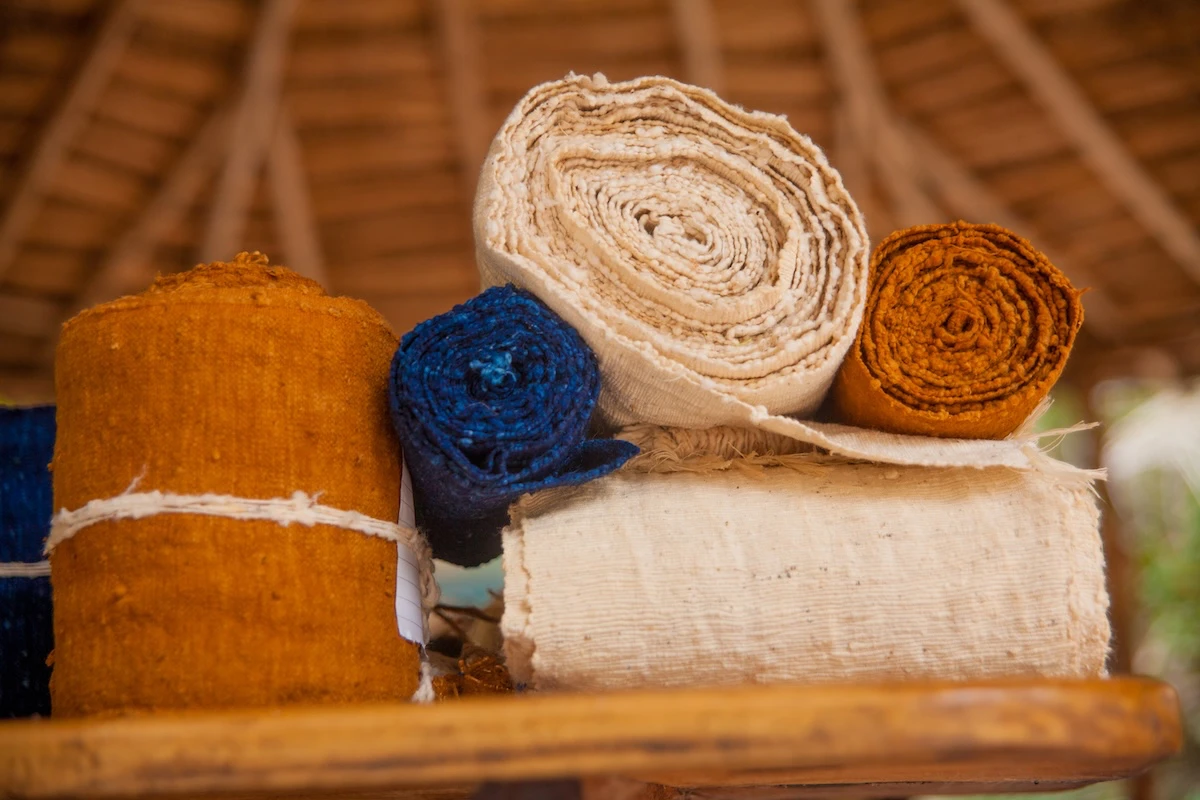 The finished, sustainably crafted Gambian product.
Keeping Traditions Alive
Cotton has been part of Gambian culture and traditions for generations. Traditional cotton fabric has been used for important occasions and ceremonies, and the skills involved in growing, spinning and weaving have been passed down through generations.
The Cotton Trail combines these traditional skills with new ideas and contemporary products. The aim is not simply to recreate the past, but to make local cotton relevant and viable today.
The initiative also considers the environmental side of production. Cotton is grown using the rain during the wet season, transport is organised to reduce unnecessary journeys, and the project uses low-impact dyes and natural materials where possible.
Who made your fabric?
With the Cotton Trail, there is a whole chain of people behind the answer – from the farmer in the east, to the spinner in Njau, the weaver on the coast, and the people who turn the fabric into something new.